

Korea's margin wipeout keeps growing as the Kospi breaks again

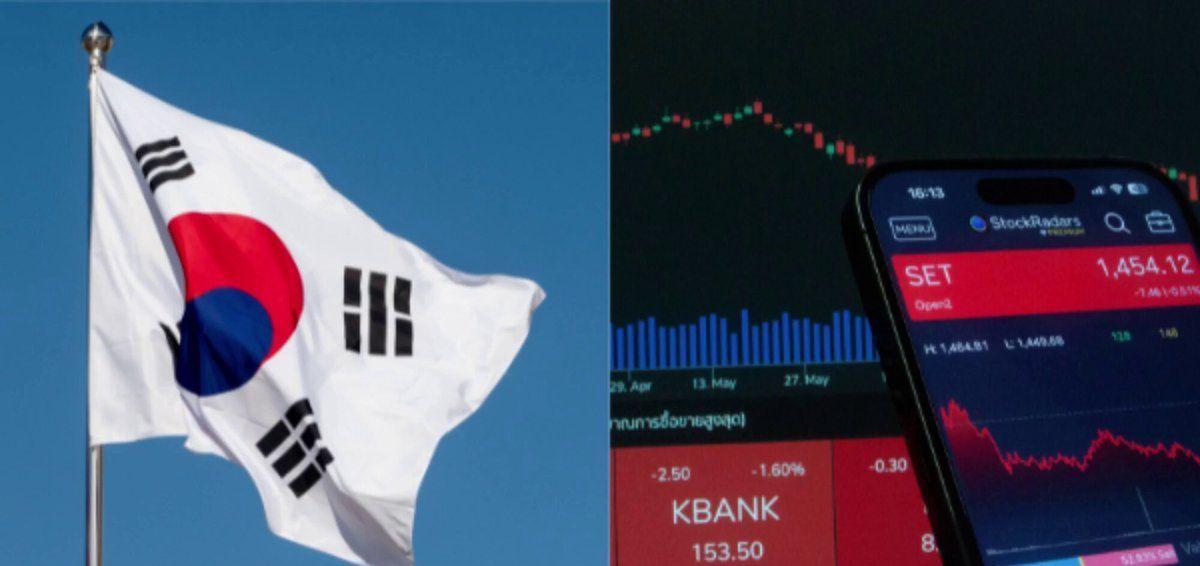
South Korea's Kospi has triggered circuit breakers on back-to-back days, with over 1.2 million retail margin accounts hit by calls and up to 360,000 fully liquidated in July's first crash wave. A second wave is likely still working through the data.
(Advertisement)

A historic run of circuit breakers
South Korea's benchmark Kospi index has now triggered market-wide circuit breakers on back-to-back trading days, a first in the exchange's history. The second consecutive halt erased any pretense that Tuesday's brutal selloff was an overreaction to be bought. The two-day decline has stripped more than 18% from the index and put July on course to be the worst calendar month in Kospi's recorded history, with losses exceeding 30%.
The immediate pressure came from the index's two largest constituents. Concerns over U.S. interest rate policy and massive tech-led selling accelerated panic in heavyweight semiconductor shares, with Samsung Electronics and SK Hynix dropping 9.45% and 11.01% respectively on the first day of the rout. The Kospi had more than doubled during the first half of the year, at one point crossing 9,000 for the first time in its history on June 18, driven by SK Hynix's announcement of HBM4E sample shipments.
The retail margin toll
Goldman Sachs data reveals that as of July 13, more than 1.2 million retail leveraged accounts had triggered margin calls, with approximately 320,000 to 360,000 accounts forcibly liquidated, equivalent to one in every 30 adults facing a blow-up risk. Since July, cumulative forced liquidations reached 344.2 billion won, with a single day on July 9 seeing 142.2 billion won liquidated, nearly five times the previous day's figure.
According to South Korean media statistics, over 60% of those liquidated are young people under 30. Retail margin deposit balances evaporated by nearly 30 trillion won since late June, falling to 107.1 trillion won, the lowest level since June 2020. Goldman Sachs noted the sell-off was significantly amplified primarily because newly listed single-stock leveraged ETFs experienced rapid deleveraging, triggering a self-reinforcing chain of liquidations clearly disconnected from fundamental drivers.
With liquidation data running on a two-day lag, the full impact of the most recent crash sessions has not yet been reflected in the official numbers. A second wave of forced selling is widely expected to show up in the coming days' figures, meaning the final scale of the damage remains unknown.
Sources:
TechTimes: Kospi Triggers Historic Back-to-Back Circuit Breakers
Macrostream: South Korean Equities Plunge as Margin Calls Sweep Retail Investors
EBC Financial Group: Why Is the Kospi Dropping Again?
(Advertisement)
Latest News




Read More...


Author
 Crypto Rich
Rich has been researching cryptocurrency and blockchain technology for eight years and has served as a senior analyst at BSCN since its founding in 2020. He focuses on fundamental analysis of early-stage crypto projects and tokens and has published in-depth research reports on over 200 emerging protocols. Rich also writes about broader technology and scientific trends and maintains active involvement in the crypto community through X/Twitter Spaces, and leading industry events.