Deepdive
(Advertisement)


How is Sui Preparing for a Post Quantum Future?

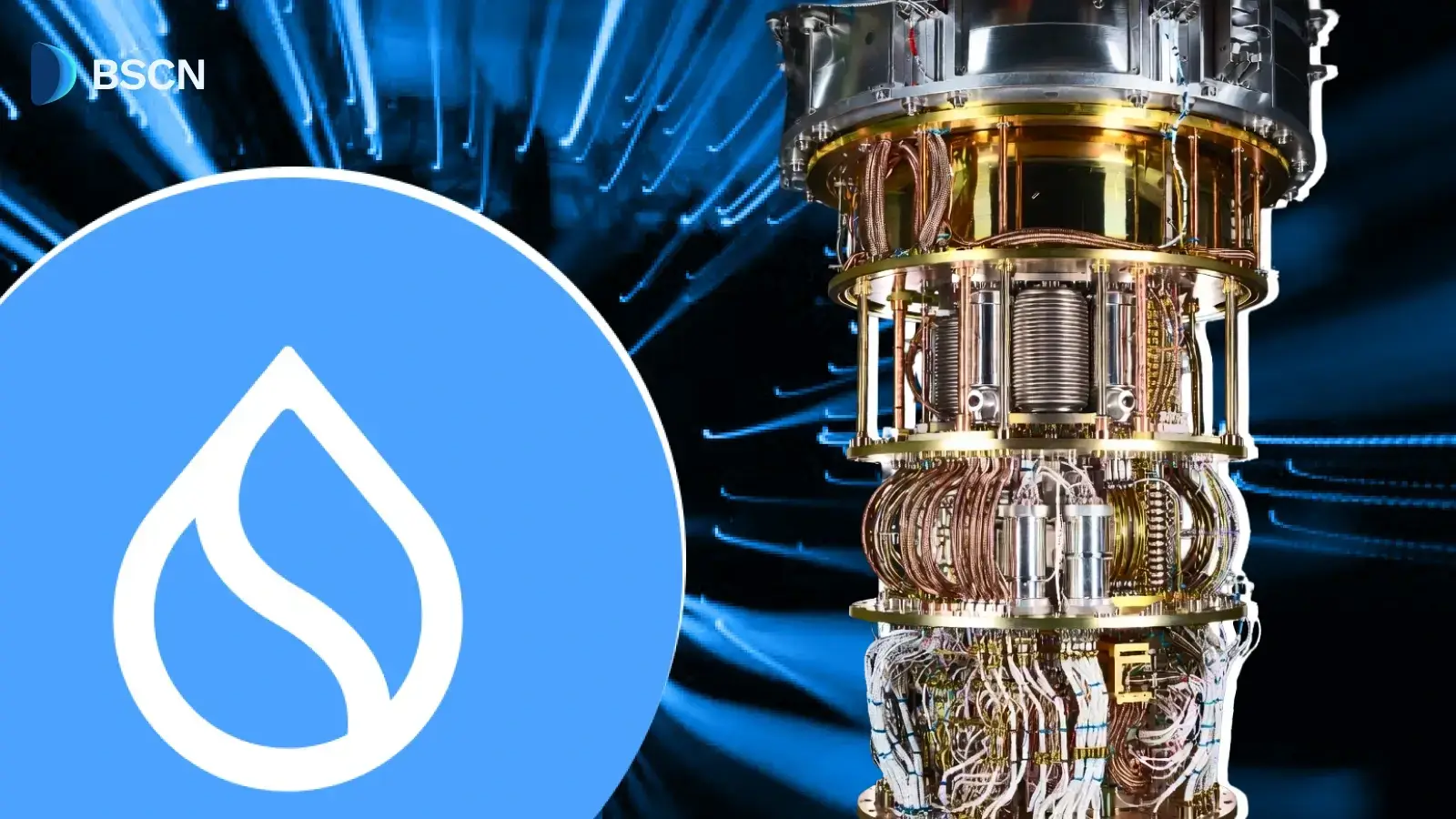
Sui is adding two NIST-approved quantum-resistant signature schemes. Here's how the rollout works, what it protects, and when it ships.

Soumen Datta
August 7, 2026
(Advertisement)
Table of Contents
Sui is adding two quantum-resistant signature schemes, ML-DSA-65 and SLH-DSA-SHA2-128s, both approved by the U.S. National Institute of Standards and Technology (NIST). The move gives Sui users an optional way to protect their accounts against future quantum computer attacks, without changing recovery phrases or moving assets to new addresses.
What Is Sui's Post-Quantum Plan?
Sui announced the update as an addition to its existing protocol, not a replacement. ML-DSA-65 will become a native signature scheme for regular accounts. SLH-DSA-SHA2-128s will protect high-value smart contract vaults through Move, Sui's smart contract programming language. Both algorithms are already standardized by NIST under FIPS 204 and FIPS 205.
Sui says its network was built for cryptographic agility, meaning new signature schemes can be added without disrupting how the network reaches consensus or stores existing data. That is different from a full rebuild, and it is why Sui frames this as a routine protocol update rather than a major overhaul.
Why Do Blockchains Face a Different Quantum Threat?
A public key on a blockchain works differently than a public key almost anywhere else. In most computer systems, an attacker needs to breach a system before working on a stolen key. On a blockchain, the public key is already visible the moment an account sends a transaction, and it stays visible permanently.
This matters because of Shor's algorithm, a quantum computing method that can break the elliptic-curve cryptography used to secure most blockchain accounts today, including the same math that protects banking systems and most of the internet. Attackers do not need working quantum hardware right now to start a "harvest-now-forge-later" attack. They only need a visible public key and patience, collecting exposed keys today to crack them once quantum computers are powerful enough.
The timeline is not far off. In March 2026, Google Quantum AI estimated that recovering a private key from an exposed public key could run in minutes on a fault-tolerant quantum machine with under half a million physical qubits.
Separately, Executive Order 14412, signed in June 2026, moved up the U.S. government's own deadlines: post-quantum key setup by the end of 2030, and post-quantum digital signatures by the end of 2031, for federal agencies' sensitive systems.
What Are the Two Signature Schemes Sui Is Adopting?
Rather than relying on a single post-quantum algorithm, Sui picked two schemes built on different mathematical foundations, so a weakness in one does not put the other at risk.
ML-DSA-65 for Everyday Accounts
ML-DSA-65 is a lattice-based signature scheme that becomes a native part of the Sui protocol for regular accounts. Sui chose the higher-security Level 3 parameter set instead of the cheaper Level 1 option. That decision follows a July 2026 incident in which researchers used an AI model to cut the effective security of HAWK, a different post-quantum signature candidate, in half after roughly 60 hours of testing, even though human experts had reviewed it for two years beforehand. Sui says the HAWK issue does not affect ML-DSA directly, but it reinforced the case for building in extra security margin.
ML-DSA-65 already has backing elsewhere in the tech industry:
Discover Promising Projects...
Promising Projects...
(Advertisement)
- Chrome and Cloudflare use the same Level 3 security for post-quantum encryption protecting more than half of human-initiated web traffic.
- AWS Key Management Service now supports ML-DSA signing in its hardware-backed key service.
- Android 17's Keystore generates quantum-safe signatures at ML-DSA-65 inside secure device hardware.
SLH-DSA-SHA2-128s for High-Value Vaults
SLH-DSA-SHA2-128s is a hash-based signature scheme, standardized under FIPS 205, that Sui will implement through Move smart contracts rather than the core protocol. Hash-based cryptography is the more established of the two families. Keeping it at the contract level lets Sui adjust to future post-quantum standards without a core protocol upgrade, which matters given Sui's bridges to other blockchain networks.
How Will Existing Wallets Be Affected?
An ML-DSA-65 private key on Sui is a 32-byte seed, the same size wallets already store, derived from the same recovery phrase users already have. Wallets back up and restore the same way they do now.
Sui's existing "address aliases" feature lets an account switch its authorization key to a post-quantum key while keeping its original address and assets in place. There is no forced migration and no need to transfer funds to a new address.
The trade-off is size. Post-quantum signatures and public keys take up more space than the Ed25519 keys used today, which increases transaction size. Sui says verification costs stay close to current levels, and its transaction size limits and programmable transaction blocks can absorb the difference while further optimization continues.
What Is Sui's Rollout Timeline?
Sui says its core implementation is built and benchmarked, with independent audits currently underway.
- Quantum-safe vaults are targeted for Mainnet later this year.
- Native ML-DSA-65 accounts are expected to reach Testnet by the end of 2026.
- Native account authentication on Mainnet is targeted for the first quarter of 2027, alongside wallet, SDK, and command-line interface support.
The rollout follows the same opt-in model Sui used for zkLogin and passkeys. Existing accounts, contracts, and integrations keep working without changes.
How Is the Rest of the Industry Responding?
Sui is not alone in preparing for quantum risk. In May 2026, BNB Chain reported successful tests of ML-DSA-44 signatures and pqSTARK consensus aggregation, though signature sizes grew from 65 bytes to roughly 2,420 bytes, cutting transaction throughput by an estimated 40% to 50%. In July, custody provider BitGo introduced quantum-risk tools that track public-key exposure and help institutions move assets into fresh addresses before keys are compromised.
What Does This Mean for SUI Price and the Market?
SUI has traded near $0.69 in recent sessions, with a market capitalization of roughly $2.8 billion. Analysts tracking the token note that a scheduled token unlock in early September, releasing about 13.5 million SUI, remains a near-term factor for supply alongside ongoing network upgrades like this one.
Frequently Asked Questions
Is Sui quantum-resistant today? Not yet. Sui is built for cryptographic agility, so it can add quantum-resistant signature schemes as they mature. Quantum-safe vaults and native ML-DSA-65 accounts are still in development and progressing toward Testnet.
Do I need to change anything in my Sui wallet or app right now? No. Existing accounts, contracts, and integrations continue working unchanged. When quantum-safe accounts and vaults become available, they will be optional and additive.
Why is Sui using two different post-quantum algorithms instead of one? The two schemes rest on different mathematical foundations, one lattice-based and one hash-based. If a weakness is ever found in one, the other does not share the same underlying assumptions, so protection does not depend on a single scheme holding up.
Conclusion
Sui is adding two NIST-approved post-quantum signature schemes, ML-DSA-65 for everyday accounts and SLH-DSA-SHA2-128s for high-value vaults, as an optional, opt-in layer on top of its existing protocol. Quantum-safe vaults are targeted for Mainnet this year, with native account authentication expected in the first quarter of 2027. Existing wallets, recovery phrases, and applications continue to function without any required changes.
Resources
- Official announcement via Chainwire: Sui Adopts Post-Quantum Signature Schemes In Move Toward Quantum Readiness
- Sui Foundation blog: Securing Sui in the Quantum Computing Era
- Report by crypto.news: Sui targets 2027 mainnet rollout for native quantum safe account authentication
Read Next...
Frequently Asked Questions
Disclaimer
Disclaimer: The views expressed in this article do not necessarily represent the views of BSCN. The information provided in this article is for educational and entertainment purposes only and should not be construed as investment advice, or advice of any kind. BSCN assumes no responsibility for any investment decisions made based on the information provided in this article. If you believe that the article should be amended, please reach out to the BSCN team by emailing [email protected].
Author
 Soumen Datta
Soumen has been a crypto researcher since 2020 and holds a master’s in Physics. His writing and research has been published by publications such as CryptoSlate and DailyCoin, as well as BSCN. His areas of focus include Bitcoin, DeFi, and high-potential altcoins like Ethereum, Solana, XRP, and Chainlink. He combines analytical depth with journalistic clarity to deliver insights for both newcomers and seasoned crypto readers.
(Advertisement)
Latest News
5h : 40m ago

Why Isn't Institutional Adoption Reflected in Crypto Token Prices in 2026?
9h : 25m ago

What Did Six Years of Cardano Staking Get Right?
August 12, 2026

Inside LUNC's Community-Run Burn Tax: Does Burning Dead Supply Actually Work?
August 12, 2026

"Network Of Networks": How Canton Lets Banks Share A Ledger Without Sharing Their Data
August 11, 2026

What Could the CLARITY Act Mean for XRP’s Legal Status?
August 11, 2026

Why Did Vitalik Buterin Put Quantum Safety First In Ethereum's Roadmap?
August 10, 2026

What Could Pi Network’s European Regulatory Filing Mean for Its Future?
August 10, 2026

How Does Chain Fusion Let Internet Computer Connect With Bitcoin?
(Advertisement)

Crypto Project & Token Reviews
Project & Token Reviews
Comprehensive reviews of crypto's most interesting projects and assets
Learn about the hottest projects and tokens

Latest Crypto Articles
Get up to date with the latest crypto news stories and events