

MiCA Licensing Chaos Attracts Crypto Scammers Across Europe

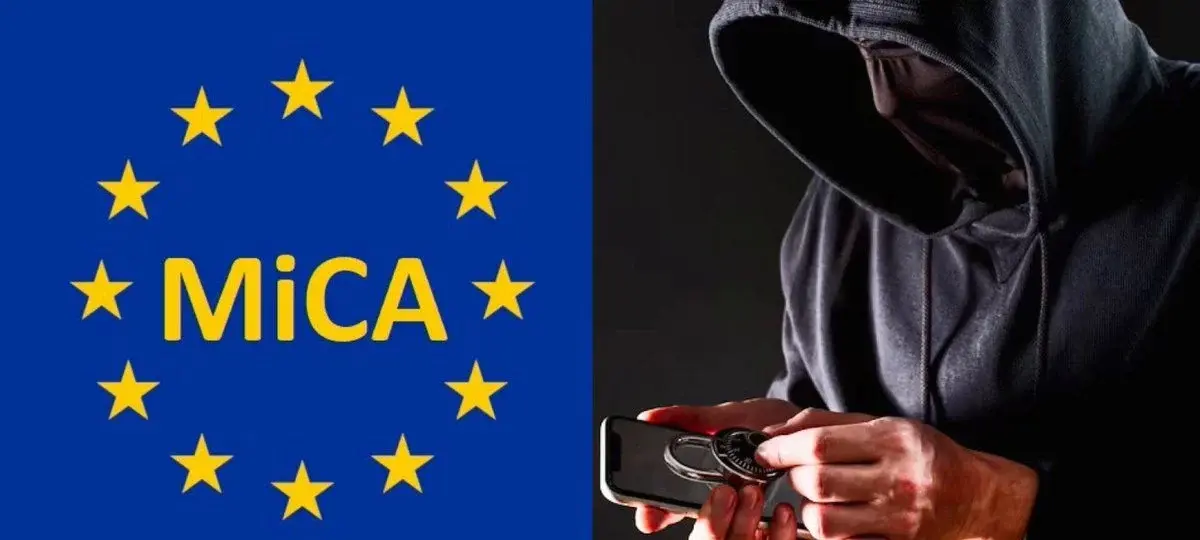
Fraudsters are impersonating regulators and crypto firms across Europe as the MiCA licensing deadline forces customers of unlicensed exchanges to move their assets, creating a prime environment for phishing and identity scams.
(Advertisement)

Europe's transition to a unified crypto licensing regime under the Markets in Crypto-Assets Regulation (MiCA) has created an opening for fraudsters, with regulators warning that scammers are exploiting the confusion to target customers of unlicensed exchanges.
Regulators Sound the Alarm
The core of the problem is the mass displacement of crypto users. Companies that failed to secure MiCA approval must wind down or transfer their EU operations, forcing customers to move their assets. That migration is precisely what criminals are targeting. Fraudsters are impersonating financial regulators and crypto businesses to target customers of crypto service providers that have failed to secure EU licenses, according to officials cited by the Financial Times.
Stéphane Pontoizeau, an official at France's Autorité des Marchés Financiers (AMF), said the regulator encountered cases in which fraudsters impersonated AMF representatives, directing users to transfer assets to them through fake websites. The threat extends to the EU level as well. The European Securities and Markets Authority (ESMA) said it was aware of scammers misusing its identity and logo, including through falsified documents, and warned that criminals may target customers searching for an alternative licensed provider. Authorities have urged investors not to rush asset transfers and to verify any contact they receive.
A Market in Upheaval
The scale of the disruption is significant. Europe was thought to have had more than 3,000 registered virtual asset service providers (VASPs) as of 2024, with Poland alone accounting for well over 1,400 registrations. The transition to MiCA has drastically thinned that field. According to an ESMA list updated at the end of July, only 323 crypto companies had obtained licenses. Data provider VASPnet estimated that more than 1,700 unlicensed crypto companies would need to cease EU operations after missing the MiCA licensing deadline, per reporting by the Financial Times.
European regulator ESMA called on unauthorized crypto-asset service providers to wind down their businesses in an orderly manner as the MiCA transitional period ended on July 1. The concern is that customers of those firms, scrambling to find licensed alternatives, are the most vulnerable to impersonation attacks. Several of the bloc's watchdogs have reportedly seen an increase in scams since the July 1 deadline that required firms to obtain authorization under MiCA.
The situation underscores a structural tension in MiCA's rollout: a framework designed to protect consumers is, in its transition phase, creating the very uncertainty that bad actors thrive on. Users are advised to cross-reference any firm or regulator contact against official ESMA registers before moving funds.
Sources:
Cointelegraph: EU Regulators Warn of Crypto Scams Amid MiCA Shakeout
CoinDesk: Europe's Unlicensed Crypto Firms Face Wipeout as MiCA Deadline Falls
ESMA: Markets in Crypto-Assets Regulation (MiCA) Official Page
(Advertisement)
Latest News





Read More...





Author
 Soumen Datta
Soumen has been a crypto researcher since 2020 and holds a master’s in Physics. His writing and research has been published by publications such as CryptoSlate and DailyCoin, as well as BSCN. His areas of focus include Bitcoin, DeFi, and high-potential altcoins like Ethereum, Solana, XRP, and Chainlink. He combines analytical depth with journalistic clarity to deliver insights for both newcomers and seasoned crypto readers.